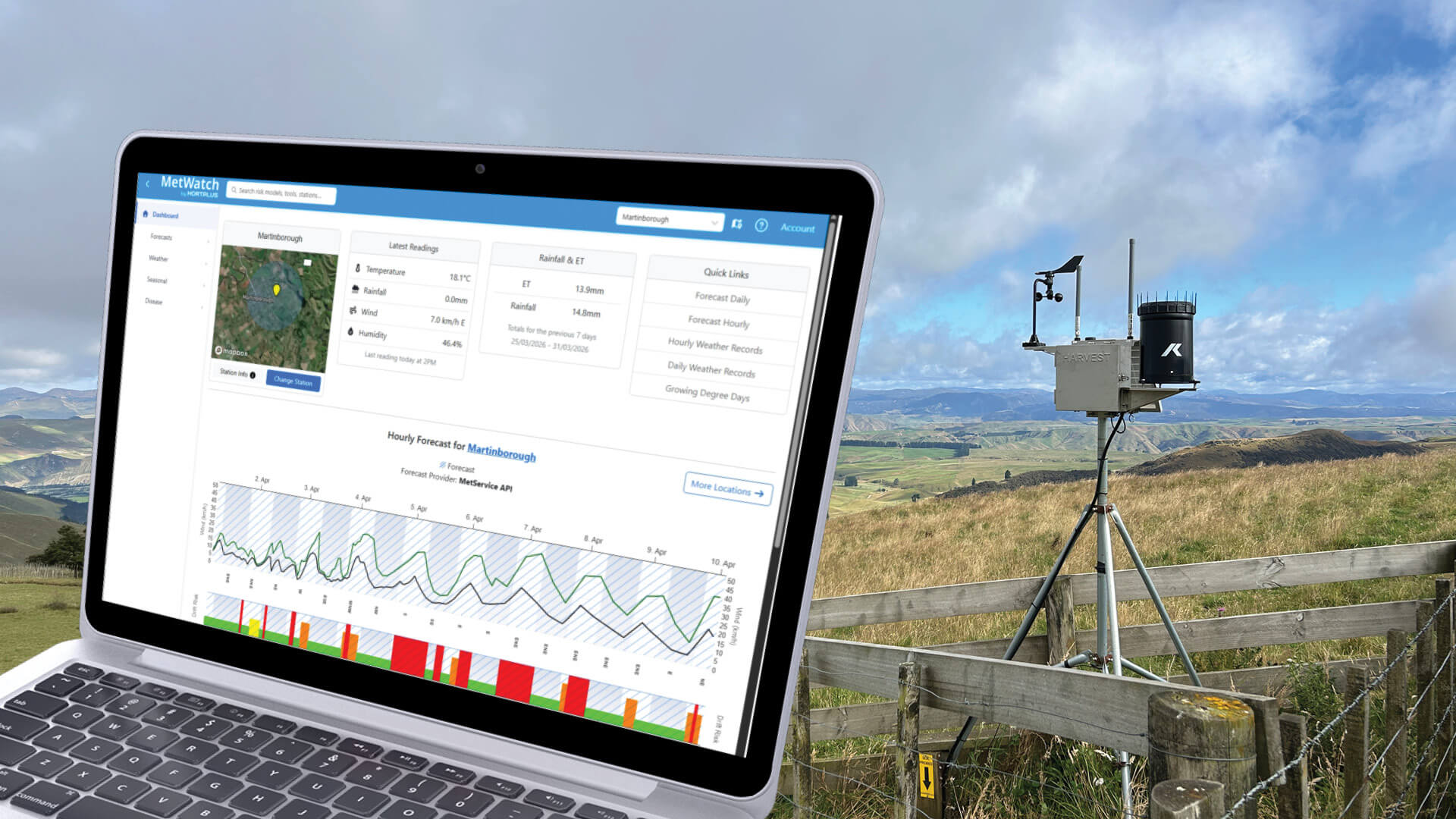
MetWatch is a platform for all seasons, so it’s no surprise you can make some serious use of its weather, pest and disease tools during Autumn.
Whether you’re looking to minimise crop losses during late harvest, protect plants from disease during pruning, or review and optimise spray timings for the future, MetWatch has a raft of time-saving models, calculators and analytics to help you through.
This seasonal toolbox guide shines a light on six of the most popular tools in MetWatch during Autumn.
Apples, grapes, pears and late season summerfruit are harvested through until April or May in some parts of New Zealand, so Autumn is no time to let down your guard. The crop-specific disease and pest models in MetWatch can help you determine high and low risk periods, supporting decisions around when to spray or take extra hygiene measures.
Apple and pear growers will want to continue keeping an eye on the black spot model in the New Zealand Apples and Pears’ Weather and Disease Portal during Autumn, while growers of late-season summerfruit should keep tabs on the disease models in the Summerfruit New Zealand Weather and Disease Portal.
For grape growers, the botrytis cinerea (grey mould) disease model in the MetWatch Weather and disease portal is particularly helpful at this time of year. Identification of high-risk periods using the models provides the opportunity to act early, potentially saving a considerable amount of fruit from this destructive fungal disease.
Once harvest is complete, the disease models in MetWatch can help determine the lowest risk periods for low-risk pruning.
Pruning wounds can act as infection sites and infected prunings can harbour disease for long periods, so inoculum management is critical to prevent the spread of fungal and bacterial pathogens in orchards and vineyards.
By reviewing MetWatch disease risk forecasts, timing pruning for low-risk periods, and following up with protective cover sprays and pruning paste, orchardists can maximise their chances of keeping their plants healthy and productive.
MetWatch is packed full of historic weather and pest and disease risk data, so it’s an ideal tool for identifying trends are easy to miss when you’re in the thick of orchard management.
Autumn is an ideal time to dive into the data to check what could be improved. There are many ways the weather data and pest and disease models in MetWatch can be used to support on-orchard planning decisions, but one of the most common uses is reviewing spray timing.
The ‘Manage Sprays’ tool, available for many of the models in MetWatch’s ‘Disease’ section, allows growers to input the timing and type of spray used on their orchard and have the product’s expected coverage period overlaid on the disease risk forecast and history graphs. This makes it easy to track outcomes and see when periods of high disease risk and waning spray protection coincide.
The Manage Sprays feature is currently available for black spot and fireblight (apples and pears); brown rot, leaf curl and leaf rust (summerfruit); onion downy mildew, onion Stemphylium, potato tuber moth and tomato-potato psyllid (vegetables); and all grape disease models in the system.
As winter nears many orchardists begin watching chill unit accumulation. Our built-in chill unit calculators are designed to provide insight into likely fruit set and the optimum time to apply any dormancy breaking agents.
This tool can also support labour and marketing planning by helping orchardists understand when harvest might be required and when a crop is most likely to be ready to take to market.
If you grow maize or sweetcorn, you may have heard about the emergence of Fall Armyworm in some part of New Zealand.
The Fall Armyworm Chat tool is a great way to keep abreast of any Fall Armyworm developments in your region, as well as identification and management strategies.
While not strictly a MetWatch tool, this helpful resource, developed by our team for the Foundation for Arable Research, is particularly timely in late summer and Autumn, when Fall Armyworm is at its most damaging.
Autumn winds, leaf fall and insect activity can all wreak havoc on weather stations. It’s worth taking extra care to check rain gauges to ensure they are clear of leaves and debris, particularly if yours is in or near the canopy.
Keep ants out of logger boxes – their eggs can damage the electronics – and spray to keep spiders out of rain gauges. Spider webs can also reduce the effectiveness of anemometers for wind measurement, so make sure to clear any webs as part of your regular maintenance.
Many growers find that cleaning of sensor surfaces and checking their station for issues every few months helps with data integrity, allowing them get the most out of MetWatch's insights.
Harnessing these MetWatch tools during Autumn can help you transition from reactive crisis management to proactive crop protection and planning.
Log into your MetWatch or industry-specific weather and disease portal to familiarise yourself with the features that are relevant to you.