News & case studies

Introducing our new Soil Temperature Tool

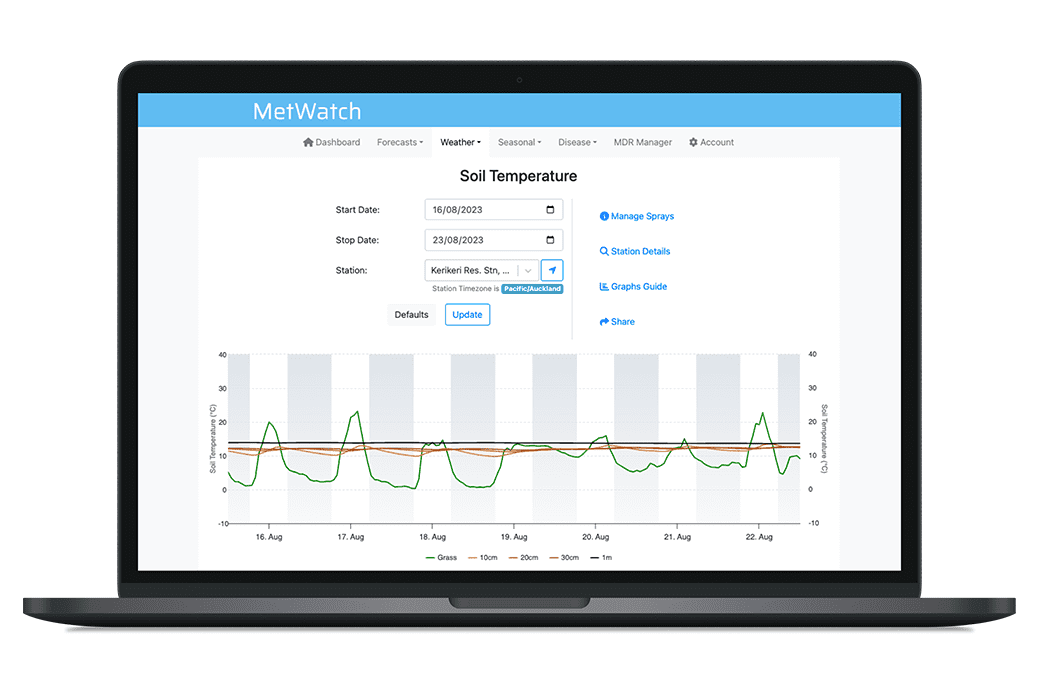
We’re pleased to announce the launch of our new Soil Temperature Tool.

Available via the dashboard of all our industry-specific Weather & Disease Portals, the tool provides soil temperature information to support grower decision-making.

Having a gauge of local soil temperature can help you make informed decisions around when to plant crops, expected nutrient uptake, disease susceptibility, and more.

The soil temperature data presented within the tool comes from readings taken by our nationwide network of weather stations.

Many of these stations include soil temperature sensors, which take readings and send the data back to our MetWatch system every hour.

This data is now available to you via the Soil Temperature Tool. You will then be able to view soil temperature data from your nearest weather station by selecting it from the dropdown list.
More articles & case studies

Compare weather forecast data side-by-side with MetWatch's new Combined Forecasts

September 11, 2026

MetWatch's weather screens have received a major upgrade with the launch of Combined Forecast – a new dashboard that brings together all your key weather data and lets you compare forecasts from multiple weather services on a single page.

Features

Spring toolkit: make MetWatch your secret weapon this growing season

September 1, 2026

Spring is crunch time for many orchardists and decisions made now can play a critical role in whether the season ahead is a good one or a bad one. From optimising spray timing for crop protection to planning irrigation, here's how to maximise your use of MetWatch this growing season.

Features
Insights

Could risk-based spraying for black spot improve crop yield and save you thousands?

August 27, 2026

Spraying apples for diseases like black spot based on real-time disease risk, rather than a fixed calendar, isn’t a new idea in horticulture. But modern technology, improved disease models and better forecasting are now letting growers fine-tune their spray timing – cutting back on unnecessary applications while making the sprays they do use more effective. Could you be spraying better?

Insights
Sustainability