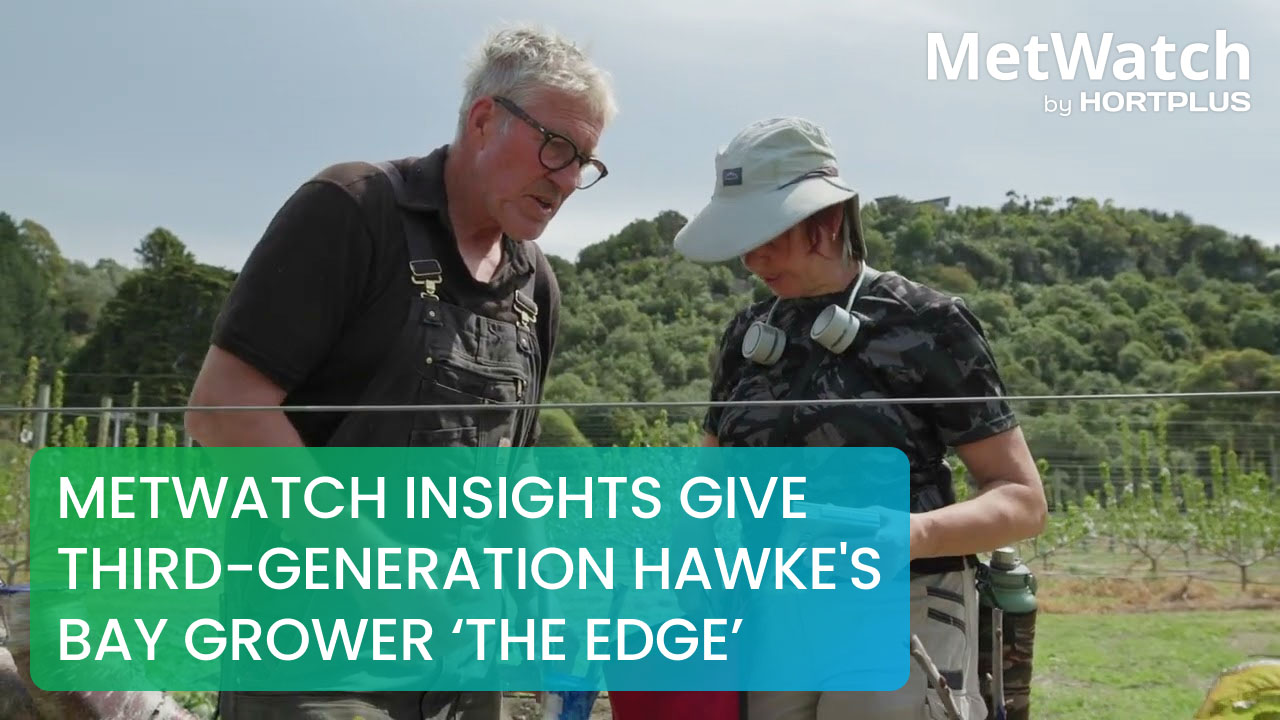
Accurate weather information is crucial when it comes to maximising yield and caring for crops at The Orchard in Hawke’s Bay, says owner Roger Brownlie.
“The weather to us is everything because it determines the risk that we are actually up against.”
His connection to the land runs deep. The Orchard has been in the Brownlie family since the 1950s, when his grandparents first purchased the property.
Brownlie and his wife took over from his father and uncle in 1992, becoming third-generation growers on the 13-hectare property and learning over time which crops were best suited for the land.
“We ploughed the land and got to know the land itself. So it was a really great experience in the early years.”
Over three decades, the couple has diversified their operations to include wine grapes, Envy apples and summer fruit ranging from apricots and cherries to peaches and nectarines. This diversity brings opportunity but also complexity, particularly as climate patterns are shifting.
“The biggest challenge we face at this point is that we're getting less and less winter chill over the winter period and less early winter chill for our early summer fruit.”
Understanding chill units to improve planning
To navigate these changing conditions, Brownlie relies heavily on MetWatch to monitor the accumulation of chill units throughout the year to predict crop timing.
"We use MetWatch in the sense we understand what the chill units are over the year. We're watching it constantly to understand what sort of flowering we'll get and whether we're going to have an early season or a later season," he says.
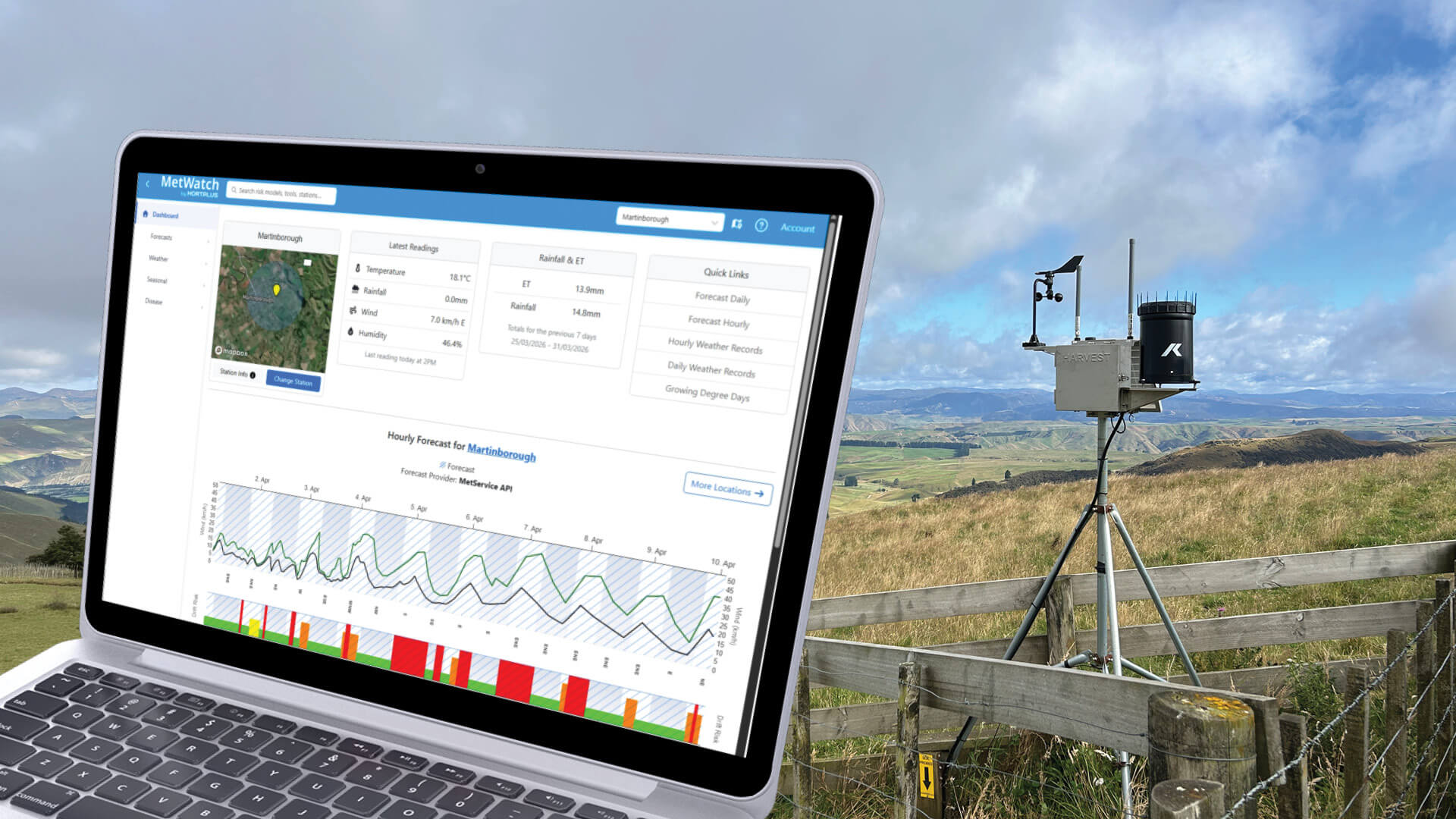
During the growing season, MetWatch becomes an indispensable daily tool. He uses the platform's weather data, plant disease models and growing-degree-day calculations to stay on top of orchard conditions.
“In the season I use it every day. It's the weather, we use the disease models, they're fantastic … also growing-degree days and all that to see where we're at. It's really handy.”
From calendar spraying to strategic application
Brownlie says MetWatch’s plant disease-model data has supported a paradigm shift in the way he approaches crop protection.
“Before we had MetWatch we calendar sprayed. So that means we sprayed every week, basically. But now we can actually look at the disease models from MetWatch and see whether it's a nil-risk period.”
With these periods sometimes spread over two or three incidences of rain, being able to confidently skip applications has had a big effect on The Orchard’s bottom line.
“We don't spray at that point. We leave it alone. It gives us an edge in the sense that we can save time and money.”
The power of hyper-local data
Brownlie says having a weather station next to The Orchard has amplified the value of MetWatch's insights even further.
“Having a local weather station right beside our property is fantastic in the sense because we feel as though it's totally up to date and … right beside us and the information that we're getting is correct.”
The benefits of MetWatch have been so significant that Brownlie has been busy spreading the word to fellow growers in the region.
“I do promote it to other growers. Once they understand it and they can see the picture, I think that it would be great for their business.”
As Brownlie finds himself navigating ever-changing climate patterns while managing a diverse variety of crops, MetWatch has become an essential tool – transforming weather monitoring from a nice-to-have support tool into an essential part of the family team.