Winter might feel like the quiet season on the orchard or vineyard, but for savvy growers it's one of the most strategically important times of year.
The decisions you make now around dormancy management, pruning hygiene, pest monitoring and crop planning can have an outsized impact on what you harvest months down the track.
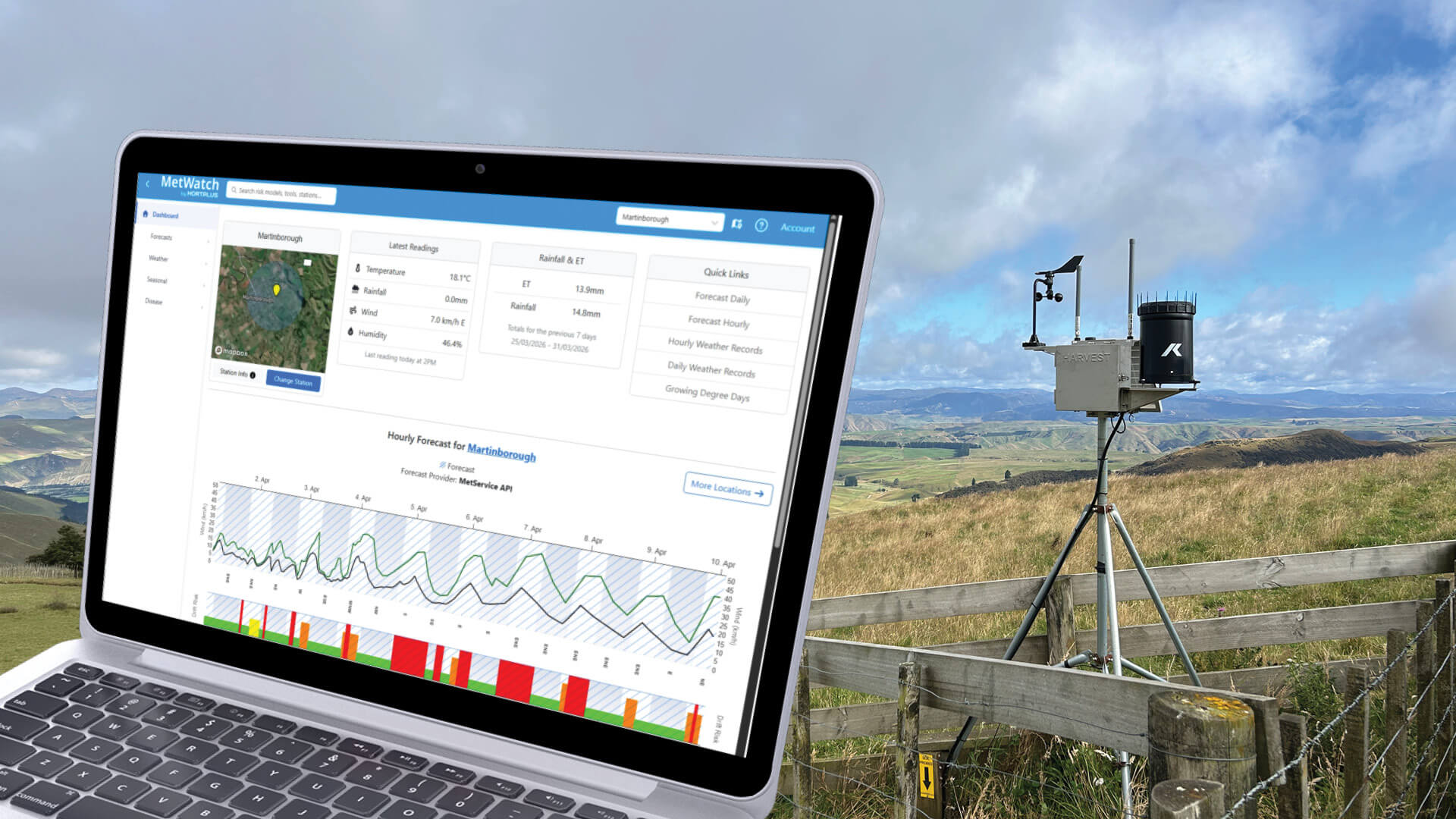
MetWatch is just as powerful a companion in winter as it is at the height of the growing season. Here are six ways to make the most of it right now.
For growers of pip fruit, stonefruit, kiwifruit and grapes, winter is all about watching the cold accumulate.
Adequate chilling is essential for uniform bud break, good fruit set and strong yields – and MetWatch's built-in chill unit tools are designed to take the guesswork out of tracking it.
Use these tools to monitor chill unit accumulation against your targets in real time, and to inform decisions about whether – and critically, when – to apply bud breaking agents. Getting this timing right can make a meaningful difference to fruit set and ultimately to your bottom line.
Log in to your MetWatch portal and look for the Chill Units tools under the ‘Seasonal’ tab.
Winter is also a valuable time to keep tabs on conditions that will influence your spring planting and crop development decisions.
Grape growers can use MetWatch to monitor soil moisture levels during the dormant period, ensuring vines are neither waterlogged nor heading into the growing season with a moisture deficit.
Vegetable growers, meanwhile, can check soil temperature data in MetWatch to track whether conditions are approaching the thresholds needed for new crops.
For onions and other spring-planted crops, understanding when soils are warming toward planting targets helps you prepare seed beds, order inputs and schedule labour with confidence.
A handful of weather stations subscribers can view in MetWatch have viewable soil moisture sensor data. Alternatively, growers can set up soil moisture sensors on their own property, linked in to MetWatch, for hyper-local soil moisture data.
Even in the depths of winter, the disease risk doesn't go to zero. Mummified fruit left hanging in trees or lying on the orchard floor can harbour fungal spores – including brown rot and other pathogens – that will be ready to spread come spring. Take time now to clear the orchard of mummified fruit and fallen debris.
European canker is another disease to manage, especially for apple and pear growers. Prune your trees in dry weather, cut out cankers to leave healthy wood, completely remove infected wood, keep tools clean, and use protective sprays for prevention.
Pair good hygiene with regular monitoring of disease models in your MetWatch portal.
Understanding baseline risk levels in winter helps you build a clearer picture heading into the critical early-season spray windows, and the 'Manage Sprays' feature can help you review last season's coverage and plan a sharper programme for the year ahead.
Now’s also a good time to ensure you are compliant with local regional council spray rules. If things have changed over the last season, update your property’s spray plan. SprayPlan Manager is a great tool for this.
Winter pruning is an important opportunity for apple and pear growers to inspect wood carefully for signs of canker, which can indicate fireblight infection. Identifying and cleanly removing infected wood now can limit any fireblight spread when temperatures rise in spring.
As the season turns, MetWatch becomes an essential early-warning tool.
The fireblight model in the New Zealand Apples and Pears' Weather and Disease Portal can help you identify risk periods and the optimal windows for applying preventative sprays as bud break approaches, giving you a head start on one of the most damaging bacterial diseases in the orchard.
Winter is also prime time for codling moth to be tucked away in cocoons – hiding in bark crevices and even in nearby wooden structures. Now is an ideal time to get out and check for them, and MetWatch's codling moth phenology model is a valuable companion here. While the pest is dormant now, the model can help you understand what the generation flights looked like last season and begin planning your intervention timing for the season ahead – so you're ready to act the moment conditions are right in spring.
Access the codling moth model via the New Zealand Apples and Pears Weather and Disease Portal, or if you’re an individual MetWatch subscriber, you can find it under the ‘Disease’ tab.
Peach leaf curl is one of the most common and frustrating fungal diseases for nectarine, peach and other stone fruit growers. The fungus that causes it infects buds during the cool, wet conditions of late winter and early spring, making accurate spray timing critical for prevention.
In late winter and early spring, harness the leaf curl model in the Summerfruit New Zealand Weather and Disease Portal to identify risk periods and determine the optimal spray windows.
Getting your protective applications on at the right time can be the difference between a clean canopy and a frustrating season of defoliation and reduced vigour.
Kiwifruit vines are undergoing winter pruning right now, making this an important period for disease hygiene. Clean pruning practices are essential to limit the spread of Psa (Pseudomonas syringae pv. actinidiae), and bud break enhancers will soon need consideration as the season progresses. The Psa model in the Zespri Weather and Disease Portal is a great place to track daily disease risk
It's also worth being aware that milder winters can increase pest pressure from insects like cicada, passionvine hopper and scale. MetWatch's temperature and rainfall comparison tool can help you assess how this winter stacks up against previous years and inform your orchard monitoring programme accordingly.
Crucially, frost protection systems need to be operational before budbreak, rather than afterwards. Use MetWatch's hourly forecast to monitor overnight temperatures closely as winter draws to a close, so you're not caught out by a late frost with vulnerable new growth emerging.
Winter is when the best growers separate themselves from the rest – not by what they're spraying, but by how well they're observing, planning and preparing. MetWatch gives you the data and the models to make those quiet winter months count.
Log into your MetWatch portal or industry-specific weather and disease portal today to explore the tools that are most relevant to your operation – and head into spring with a plan.